Healing the patient: MTS and the reconstruction of a revolutionary therapy bike
There’s a classic conundrum in post-op or post-injury rehab for hips and knees. Best outcomes dictate that patients move early into range-of-motion exercise. But for years, pedaling a therapy bike was impossible for patients newly on the mend, and difficult and painful even in later stages of rehab.
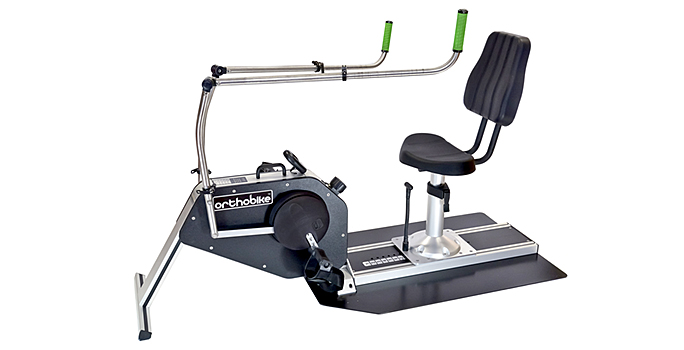
In further developing a breakthrough stationary therapy bike to overcome this problem, Dan Vassilaros, president of Mindbridge Innovations, confronted a dilemma of his own. The revolutionary OrthoBike™ blazed a systematic, progressive route to early mobilization therapy success.
More than an improved therapy bike, this is the kind of product that brings tremendous value to the world. It empowers patients to manage their own rehab, expanding the productivity of rehabilitation professionals and saving substantial money. For countless cases, it’s just what the doctor ordered. But for OrthoBike to succeed in the business world, a powerful idea was not enough.
“The therapists who tried the initial prototypes are on record about its potential,” Vassilaros said. “ ‘This is the best device we’ve seen for early range-of-motion work’ – that’s what we heard from them.”
OrthoBike’s unique combination of features brought together strain-reducing dual-action arm and leg motion, complemented by adjustable elements throughout. This innovative combination gave patients the tool to customize the early range-of-motion exercise their individual cases required. They were unimpeded by previous barriers of pain and range limitation. OrthoBike also promoted enhanced gait training and – crucially from a marketing standpoint – was well suited to patient-managed home rehab use. It embodied a brilliant potential to reshape hip and knee rehab for the better.
Unfortunately, the physical presentation of preliminary iterations was less impressive. To excite patients – and persuade therapists and hospital buyers whose purchasing decisions were critical – it needed a look and functionality as winning and dynamic as its underlying conception.
Intent on shaping an OrthoBike worthy of its engineering pedigree, Vassilaros called on Matt Sommerfield and his team at MTS. At this point a process took over that combined evidence-based considerations with serious engineering and aesthetic resources.
Before MTS got involved, the product had already been through two generations of prototypes. The second-generation types, pulled together with the help of a sheet-metal fabricator, were effective but unrefined and far from beautiful.
To best understand the nature and scope of needed improvements, these rough second-gen versions were shared with rehab professionals. The feedback these efforts produced was grist for a host of major upgrades. An overall development process was charted, with the goal of achieving an essential transformation. This creative procedure aimed for something sleeker, more contemporary, more clearly bred to perform in rehabilitation environments.
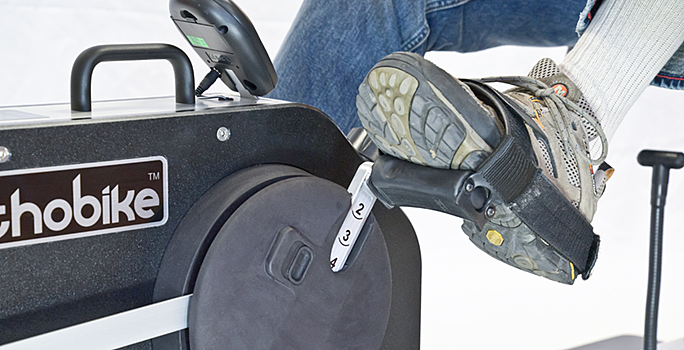
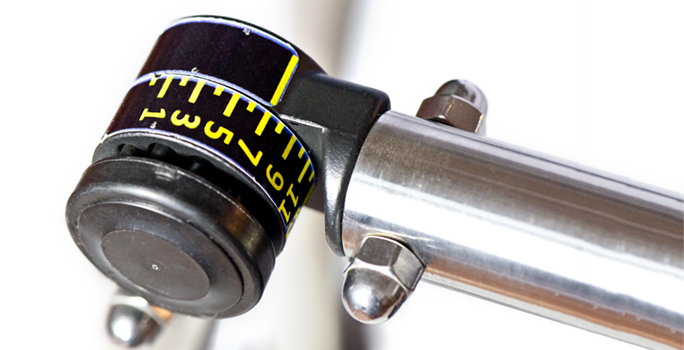
Almost part by part, the MTS team considered and reshaped OrthoBike’s mechanical details. The function of the crank was streamlined, pedal adjustments refined. The seat and handlebars received new, more ergonomic configurations. Adjustable parts were labeled, simply and clearly, to help patients and therapists make the most of their use. The design was made more compact and previously open assemblies were enclosed. Portability was designed in, and the device’s digital performance measurement capabilities honed for maximum reliability and user friendliness.
Beyond all the improvements this method yielded, the aesthetic overhaul wrought by MTS produced perhaps the indispensable metamorphosis. The new OrthoBike conveys purpose, comfort and ease of use at a glance. Patients feel invited to work hard and do well with it, not only because it’s superbly engineered, but because it bespeaks that usefulness in every line.
“Matt understood from the start that we had to convince the people who had to buy OrthoBike and the people who had to use it,” Vassilaros said in describing MTS’s highly unusual unity of engineering and aesthetic capabilities. “He was great at this – his eye is connected to his heart.”
Vassilaros said MTS was also of substantial help in the acquisition and manufacturing phases of his work. “This goes beyond Matt’s understanding of materials and assembly,” he said, explaining that MTS’s years of development work in sourcing manufacturing processes have provided an exceptional ability to guide clients to vendors who can fill orders quickly and economically, maximizing profitability.
Another fundamental advantage of MTS process was an unflinching insistence on doing exactly – and only – the development work needed to make OrthoBike a compelling product. A key to this process is to constantly ask what it makes sense to spend, and taking calculated steps along those lines that regulate the client’s investment as if it belonged to MTS.
“I had to trust Matt in this, that his work would deliver every possible bit of bang for the buck,” Vassilaros said. With the project largely financed out of personal savings, the ability of MTS to produce superb results and respect budgets was absolutely make-or-break. “I knew we’d only have a chance to sell this with the great design and development that Matt provides. His genius is not only in design and manufacturing, but also in making it happen with the business realities in mind.”
Once bitten: shaping the product profile for the Lyme-Aid Diagnostic Test Kit
Deer ticks infest rural and suburban communities across the United States – and many of these pests carry the bacteria that cause Lyme disease. To complicate this serious public health problem, diagnosing Lyme infections in humans and dogs can be tricky. It’s far easier to detect the infection in the ticks themselves.
Hence the Lyme-Aid Diagnostic Test Kit, brainchild of Melissa Shaw, a former grad student at Pennsylvania’s East Stroudsburg University. With her mentor Jane Huffman, microbiology professor and head of the ESU-affiliated Northeast Wildlife DNA Laboratory, Shaw had analyzed ticks that had bitten people or dogs. Technicians can immediately distinguish between deer ticks and other species, and need just two or three days to determine with a 99.9 % degree of confidence if a deer tick is a Lyme carrier.
That information, potentially available before any symptoms appear in a bitten person, can be decisive in judging whether to begin antibiotic treatment. (Left untreated, Lyme may cause serious long-term health effects, including paralysis of facial muscles, pain or swelling in the joints, abnormal heart rhythm, and memory disorders.) If tests find no Lyme-causing pathogens, treatment may be unnecessary.
But how to get a tick from skin bite to lab? Shaw and Huffman devised a collection kit that included a tick remover, an alcohol wipe, a specimen bag and labels, a tick testing form, and a preaddressed submittal envelope.
So far, Lyme-Aid was just an excellent idea and a handful of parts. The greater need for commercial success: to produce an organized, appealing package and the means to market it successfully. To manage this critical phase, the lab called on MTS. Conceiving and delivering a compact, well-conceived container was only one need; to be an effective product, Lyme-Aid would also need an appealing, informative visual identity and high-notice packaging.
MTS fitted the multi-item kit into a slim, convenient, molded-plastic box. A display stand was developed to offer the kit at point of purchase or elsewhere in sporting goods and outdoors shops. An eye-catching appearance, featuring the MTS-designed Lyme-Aid logo and important supporting information, ensures that sportsmen, hikers, campers, birders, pet owners and nature lovers generally will see and purchase this invaluable product.
“Matt took the idea that we had and found a way to make it enticing to the public,” Huffman said. “His creativity in putting it all together was stellar.”
For her part in developing the kit, Melissa Shaw won an award from the university recognizing her entrepreneurial imagination and drive. For those who love the outdoors, there’s a greater prize – a legitimate safeguard against the debilitating effects of Lyme disease.
The Right Mix – Amping Up an Exciting New Musical Tool
In a tough marketing environment, it’s not enough for a new product to embody killer technology. It also needs the unmistakable look and feel of a high-tech object.
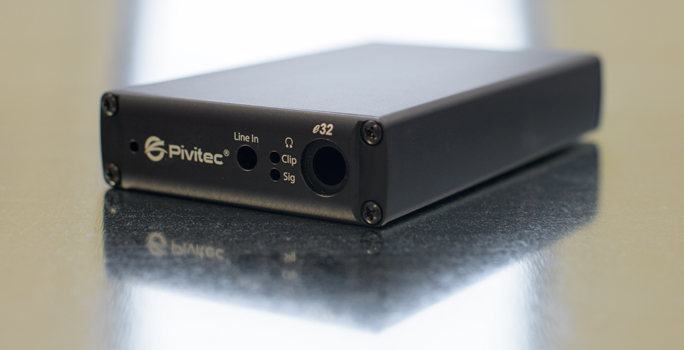
The capabilities of Pivitec’s e32 Personal Mixer are cool incarnate, replacing bulky gear for onstage sound monitoring and mixing with a compact device and one sleek app. That’s all it takes for performers to hear and mix their sound onstage in real time. This personal mixer delivers superb 32-channel digital fidelity and pinpoint control from practically any handheld device.
Pivitec's e32 Mixer
Custom Front and Back Plates
Engineering and Development
Machining Fixture
1of4
As convenient as it is capable, the mixer is catching the eye (and ear) of top musicians across many genres and venues. Rodger Hodgson, legendary voice of Supertramp, will be using Pivitec gear during his 2013 tour which kicks off March 22 in Clearwater, FL. It’s also been a big hit with those performing in high-tech houses of worship. But before anyone could experience this prized gadget, it had to be shepherded through development to delivery – as only MTS does it.
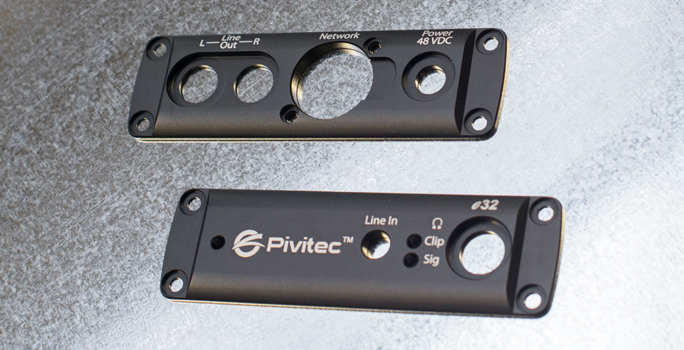
In its earliest iteration, the mixer was housed in a generic, off-the-shelf enclosure. “We wanted to add design appeal and reduce the cost,” says Pivitec president Tom Knesel. “That’s where Matt came in. He designed a custom extrusion, which looked great. And he also helped us with the sourcing and saved us money.”
The new custom extrusion halved the cost of the off-the-shelf housing, contributing significantly to per-unit profitability. At the same time, MTS designers delivered a unique, elegant enclosure in anodized aluminum that speaks directly to the sophisticated function of the mixer. It’s a look Pivitec execs like so much that they’ve changed their app’s screen to match it.
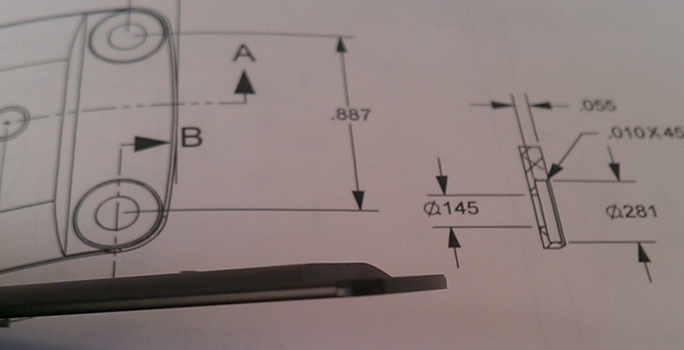
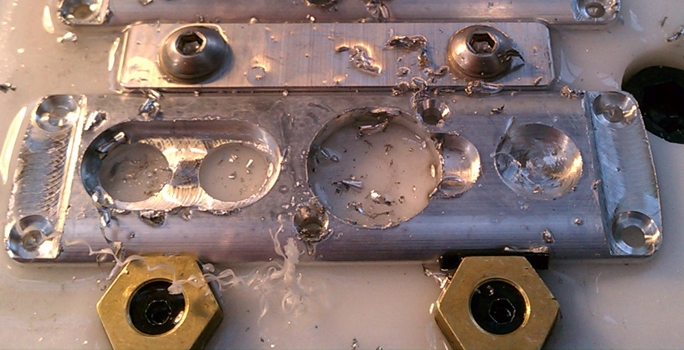
MTS seamlessly transitioned the new extrusion’s custom-machined components from its in-house prototype shop to an MTS-managed production environment. Staff experts in CNC machining facilitated design, testing and optimization of fixtures and tooling. The process delivered highest quality while restraining production cost. As the product moved from design to the production stage, Pivitec saved substantial time and money.
For all its visual polish, the revamped e32 is truly rugged. Musical touring is murder on equipment, so the mixer is built to take a beating. In fact, Knesel said, it should survive if a truck runs over it.
“Matt’s been a good resource,” he said. “He has an exceptional sense of how manufacturing works – he knows the vocabulary. Since he has an in-house machine shop, you can try ideas out right there. He’s helped us create not just a product but an identity for it.”
Richard Schultz Design: Creating a new Outdoor, Spa, & Garden Furniture Line the new Mateo™ Collection
Richard Schultz Design, which was recently acquired by Knoll, Inc., creates, produces, and markets high end outdoor furniture in the mode of classic modern design. Beautiful, clean and functional, the look of a Richard Schultz outdoor piece is iconic. Originally designed in the 1960s for Knoll International, it has since been manufactured and distributed independently by the Schultz Organization.
Richard Schultz Design is primarily a design shop. Their designs must be realized in ways that fulfill aesthetic intentions, ensure customer satisfaction and enable the company to be profitable. In all these things, a working partnership with MTS has been indispensable.
Richard Schultz Design - Mateo™ Collection

Richard Schultz Design - Mateo™ Collection

Richard Schultz Design - Mateo™ Collection

Richard Schultz Design - Mateo™ Collection

1of4
“They have a unique ability to bridge the gap between design and engineering,” said Peter Schultz, the firm’s president and owner. “They do more than solve technical problems. They get the gestalt, the philosophy behind our designs. And that extends through the work into all the details of what we do.”
A current example is the firm’s new MateoTM Collection. This line combines anodized aluminum frames and a proprietary outdoor elastomeric mesh. The appealing result brings ergonomic comfort and a refined modern look to seating in the garden.
MTS took an active part in maximizing the design-for-manufacture efficiency of the collection, as well as furnishing their advanced supply-chain/sourcing/manufacturing expertise. Peter Schultz says this participation has been pivotal in preparing the line for launch – and profitability. “They were obsessed with the details at every stage. We’ve developed a collegial relationship, and we’ve exploited ideas that they’ve come up with.” Schultz said his MTS working partners successfully addressed a welter of challenging details, all the while honoring the design integrity of the collection.
MTS also assumed full responsibility for sourcing the product, providing correctly selected, specified and priced materials, and also choosing over one half dozen vendors whose work had come together to manufacture the new MateoTM Collection. “Without MTS, we’d have a big coordination burden,” Schultz said. “They spare us having to bring together the work of aluminum extruders, benders, welders, anodizers, sandblasters, plastic molders and others.” This phase of the work required MTS to carefully manage and coordinate the entire outsourced manufacturing process to limit cost, create high quality products, and meet shipment schedules for the entire new line.
“No one source could possibly do all this,” Schultz said. “Trying to manage it ourselves was difficult and annoying. MTS value engineered the whole process. With them, we place a single purchase order, and their team does it all” – including the continuing management of critical quality concerns.
Before MTS became engaged, solutions to quality issues were frequently elusive and more often frustrating. “They’re enormously attentive and they understand our needs,” Schultz explained. “On the one hand, we want to find ways to use new materials that are suited to our design philosophy. On the other, it’s necessary to control costs. You can find people who handle product engineering and development, and you can find some who can take care of sourcing. MTS can do both, and that’s extraordinary.”
SkyBrush: Re-inventing a product, process, and business
Consider the lowly blackboard eraser. It’s the kind of workaday invention – old-school, if you like – that’s so familiar it’s all but invisible. A product like that lingers decade after decade without much change in appearance or function, not because it can’t be improved, but because no one has brought the right skill and vision to bear on it. In this case, brushing up a staid old standby needed the assistance of MTS.
Those clunky felt blocks did more smearing than erasing. The felt picked up some dust, but it forced more of the chalk grains into pores in the board surface. Wipe by wipe, words and numbers got harder and harder to read. Eventually the blackboards needed regular washing (scrubbing with clean water) to allow legible use.
As whiteboards replaced chalkboards in many classrooms, conference rooms and corporate settings, the dust was gone but problems remained. Whiteboard erasers left a smeared mess behind – unsightly, unprofessional and also hard to read. Whiteboard spray cleaners became imperative to lift the smear from the whiteboard surface.


A better answer was at hand. The original inventor’s core concept: resilient glass bristles anchored in a polymer block replaced felt. The glass bristles flicked chalk off of the blackboard surface and the ink from whiteboards. The Skybrush eraser ended the need to wash blackboards or clean whiteboards with harsh solvents. Gone were the dusty days of yesteryear, and the extra effort that went with them.
SkyBrush left whiteboards and chalkboards clear, streak-free and easy to read. It was superior in every way to the erasers it was replacing.
To achieve this advance, it was essential to redefine the manufacturing process, maximizing profitability and safety. Initial methods relied on large, unwieldy molds and an old oil-fired boiler. The first essential change came from the design side of MTS. MTS made the brush ergonomic in shape to allow a better “feel” in the user’s hand. New materials and forms for the brush reshaped it to fit the hand perfectly – and visually asserted its status as a high-function contemporary object.
A comprehensive evaluation of approaches and equipment impelled a change to small, lightweight molds that are handled with far greater speed, ease and safety. An more efficient EPS bead pre-expander was added to the process to lower the total cost of the brush material. The boiler was replaced by steam cabinets. These cabinets allow for the more precise temperature control needed to make a more consistent quality product. The cabinets were sourced to be affordable, durable and readily available through supply channels. Productivity and profitability improvements from these changes have been substantial.
MTS was also asked to get involved with the marketing and sales of SkyBrush. Our team developed the marketing plan, then designed a two-tiered product offering that emphasized the ways in which the product’s look and feel were as exciting as its function. Fundamental to this part of our work was creating an e-commerce website to anchor SkyBrush sales. These were vital steps. Together with our total reconfiguration of the manufacturing process, they transformed an already good idea and made it the basis for a highly viable business.
There’s hardly a manufactured product anywhere that can’t benefit from focused reengineering, re-design and an alignment with a vibrant marketing and sales plan. MTS has the creative and technical capabilities to address any factors that limit a product in look, feel and function – and wipe them out.
Contact us today for these services from MTS
